Humanoid robot resale value report 2026: what your robot will actually be worth

In 2026, there won’t be anything like a secondary market in humanoids for consumers. The first private deals have been struck, but the markets that do exist are illiquid, with pricing very volatile and the software and warranty restrictions of some platforms and account requirements that make these things harder to resell than phones or cars. Plan to have a worst-case value close to zero.

RobixOne is an independent editorial site. We do not sell humanoid robots, we do not accept payment for reviews, and every recommendation follows our published HOSI methodology and aggregated owner research. Read our methodology →
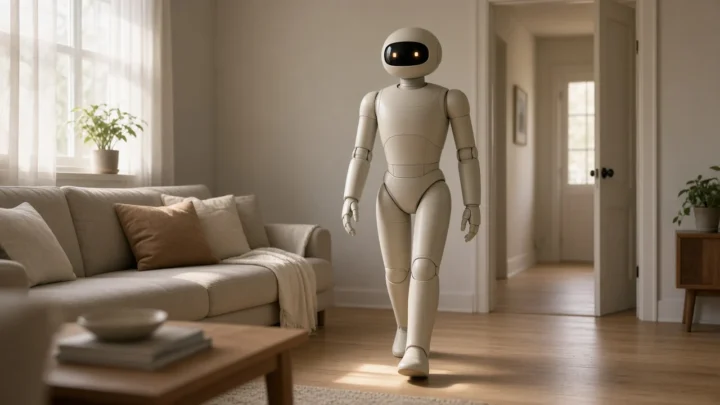
Tesla Optimus humanoid robot on display in a showroom-style setting, illustrating the early consumer humanoid market.
Early consumer humanoid robots are starting to change hands on the secondary market, but the resale economics are very different from cars, phones, or laptops.
KEY TAKEAWAYS
  • By 2026, there's almost no secondary consumer market in humanoids; there's some peer-to-peer sales but it's tiny volume.
  • Limits from manufacturers on warranty transfers, software licenses, and account ownership mean that most platforms actually sell for far less than the listed price.
  • Secondary markets are a little more mature for industrial units through specialist brokers, but none of the consumer units.
  • Condition, software entitlement transfer and product-cycle status play the largest role in residual values.
  • When buying, plan for a zero resale value at minimum, rather than relying on typical depreciation curves seen in automobiles.

Why humanoid robot resale value is so low in 2026

There are three structural facts that make the secondary market for consumer humanoid robots non-existent in 2026. Firstly, available supply is currently low, as most platforms have only been in the business of shipping robots for less than a year, so there are not yet many consumer units out there to resell. Secondly, the available units are still tied to current service plans, creating a transfer problem. Thirdly, and most significantly, manufacturers have not developed the account transfer, warranty, and software licensing support structures for a secondary market to flourish.

Compare this to used cars or used phones. There’s the transferable title to a used car; the transferable warranty (with restrictions); and the transferable insurance product. For a used phone, you get transferable software; and you can quickly switch the accounts to your name. For a used humanoid today, there’s none of those options by default, hence why all the few private sales that happen today do so at wildly varying prices.

What early private sales are actually clearing at

Public tracking of private humanoid sales in 2026 is limited, but the broad pattern from enthusiast forums and specialist brokers is consistent. Lightly-used mainstream consumer units (under 12 months old, original owner, full documentation) are clearing at roughly 60%–75% of the original purchase price. Older units, units without service plans, or units missing accessories tend to clear at 30%–50%.

These figures are subject to sudden shifts tied to product cycles. A product nearing the end of its life cycle may see secondary-value prices drop 20% to 30% in just one quarter, while a recent firmware or software release can temporarily boost value.

Unit profileTypical clearing range (% of new price)Notes
Lightly used, <12 months, full docs60%–75%Best-case for current-generation platforms
Used, 12, 24 months, service plan active45%–60%Service-plan transfer is the main value driver
Older, no service plan, missing accessories30%–50%Most common profile on enthusiast forums
Pre-replacement generation20%–40%Volatile; drops quickly near new-product launches
Industrial-derived consumer unit40%–65%Specialist brokers exist; higher fees

Manufacturer restrictions that hold resale value down

Some manufacturer policies impact the current value of your robot. In many cases, the warranty is transferable to a secondary market buyer, but only if the transfer is registered, sometimes for a fee, at the manufacturer. In other cases, the warranty cannot be transferred, which further reduces the value of your robot in practice.

Second is transfer of the software account. Most platforms tie software entitlements to the original account, including unlocks, customizations, and remote entitlements, for example. And transferring them requires the manufacturer’s involvement and is typically slower and more complicated than some buyers expect. Third, transfer of the service plan. Not all service plans are transferable; the new owner will need a new service plan with a new inspection.

When you go to sell a humanoid, you should demand a written statement from the manufacturer detailing what will be and won’t be sold; if you want to know what you can expect to get for it on the secondary market, start by reading that document.

When trade-in programs make sense

In 2026, only a select few manufacturers launched trade-in programs, permitting current owners to put down a portion of the old machine’s value as a credit toward a new model. Such programs are handy, though they usually aren’t as lucrative as a private sale.

You usually get 40 to 55% of the original price for a trade-in, which is less than the private-sale range of documented cars. But there is convenience and certainty. It’s an instant transaction, you’re transferring to manufacturer mechanics, and you don’t have the hassle of finding a buyer. For those who value time and peace of mind over the highest resale value, a trade-in is the correct way.

Planning around a worst-case zero-resale outcome

For a humanoid buyer, the most critical financial move in 2026 should be to budget on the premise that the value of the bot will be 0 at the end of three to five years. And no, not because there is a high chance of this happening. It’s because the used market for them is still too new to depend on resale to recoup your cost.

Base your purchase on the robot’s value to you over the years of use, not on what it may be worth to a future owner. If you rely on an estimated residual value to make the numbers add up, they probably don’t.
BEFORE YOU BUY

What buyers should actually do to protect future resale

To protect the vehicle’s future trade-in or resale value, it pays to establish good habits from day one of ownership.

  1. Keep packaging, documentation and accessories in original condition, as missing accessories materially impacts resale value.
  2. The manufacturer service plan must always be kept up to date; service plan lapses are immediately detected by the buyers and can cut the value of the car by 10-20%.
  3. Take pictures, note down the condition of the robot and write the current software version for the quarterly report. You will need these for your future sales listing.
  4. In writing within the first 30 days of ownership, you must confirm the manufacturer’s transfer policy so that there are no surprises down the road.
  5. Don't modify it, don't repair it outside the manufacturer, and don't install unapproved software. Those actions make the console ineligible for transfer across most platforms.
  6. Schedule your sale around product cycles; you can often expect higher prices if you sell three to six months ahead of a new model launch.
TRUST CHECK

Myth vs reality

Myth

Humanoid robots will hold value like high-end cars.

Reality

Cars have a well-developed resale market, ownership documents are tradable, and depreciation patterns are already well understood. Humanoid robots in 2026 will have none of these.

Myth

I can just sell my humanoid on a marketplace site.

Reality

The consumer market has not yet implemented categorization, escrow, and transfer protocols that would reliably sustain the sale of humanoids, and while there are specialist forums and brokers in existence, their transaction volume remains extremely low.

Myth

The warranty transfers automatically to a new owner.

Reality

You will almost always have to register the warranty with the manufacturer, sometimes for a fee, and some won't allow a transfer at all. Get it in writing before putting it up for sale.

Myth

Trade-in programs offer the best price.

Reality

A trade-in gets done faster with greater certainty but normally pays less than selling it to a stranger. It really depends if it’s certainty or a maximum price you want!

Myth

Older units always sell faster because they’re cheaper.

Reality

In fact, it's often true that pre-replacement-generation units take the longest to sell, since buyers are likely aware that the product is being replaced very soon. Typically, 3-6 months before the announcement, selling units fetches the maximum amount they can for.

FAQ

Frequently asked questions

The state of the resale market

Is there a real secondary market for consumer humanoid robots in 2026? ★
But just barely. A small number of private sales are trading through enthusiast bulletin boards and niche brokers. Sales volume is low; pricing is unstable; the ecosystem around transferable warranty, software accounts and service plans is still nascent.
Where can I list a humanoid for sale?
In 2026, you can buy and sell humanoid robots online through enthusiast forums, specialist robotics brokers, and a small handful of authorized secondary marketplaces from the manufacturers themselves. The typical retail market for consumer goods still does not handle humanoid sales with any degree of consistency.
How long does a typical resale take?
It can range from several weeks to months depending on the device condition, documentation, how close to the next model launch you are and what platform you are looking for.

Pricing and depreciation

What percentage of the original price should I expect to clear?
Lightly used, less than 12-months old, with all paperwork and manuals: 60-75% of original price. Older units without service plan, or without accessories: 30-50%. Pre-replacement generation: 20-40%.
Why is depreciation so steep?
It’s a rapidly changing space, software-locked features take a while to develop, warranty and account transfers are a pain, and it’s a relatively niche market. This is all weighing on depreciation.
When in the product cycle should I sell?
Three to six months ahead of when a new generation is expected to come out is generally a good time to look. Buyers are still eager, but the old unit hasn't officially been phased out.

Transfer mechanics

Does the warranty transfer to a new owner?
Or, sometimes, it may require formal registration (often with a fee). Occasionally, the manufacturer prohibits transfer entirely. Be sure to obtain written confirmation prior to listing.
What about software accounts and personalization?
On most platforms, these software entitlements, unlocked features, and personalization details remain locked to the original account, and often require involvement from the manufacturer in order to transfer them, which takes longer than customers expect.
Can I sell a robot that’s still under subscription?
Generally, the subscription is between you and the manufacturer. So in most cases, owners have to wait until the subscription has run its course or pay a fee to cancel the account before you can transfer ownership of the unit.

Trade-in programs

Should I trade in instead of selling privately?
Trade-in is faster and more certain but it’ll usually pay 10-20% less than private to a well-prepped buyer. Pick the route that suits what you care more about, speed or dollars.
Are there cross-brand trade-in programs?
In 2026, this will barely exist. The majority of trade-in programs are restricted to direct manufacturers, which means you're trading an old product for a new one from the same brand.
VERDICT

Bottom line

Always assume you’ll get zero resale value. When making your purchase case for a humanoid, do it entirely around what the robot will be worth to you over its time in your home, not what you might be able to sell it for later. Maintain the original packaging and accessories, all documentation, and keep your coverage (service plan) continuous from day one. If your platform’s product timeline gives you a window 3-6 months before a new product releases, take it; that’s when it’ll usually have the highest resale.