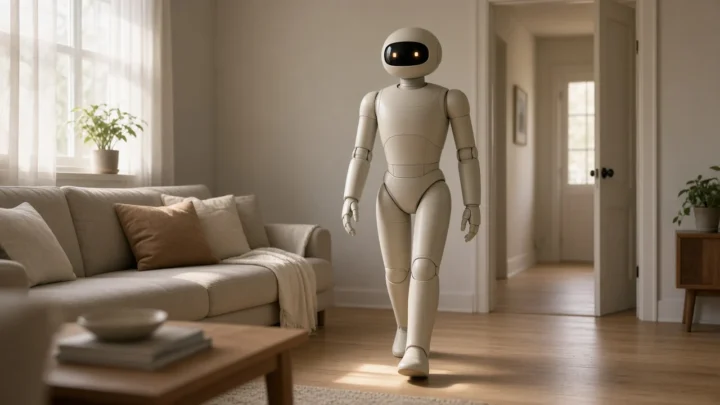
Why the first week of a humanoid robot introduction matters
A pet or a child usually gets to know their new roommate in the house within a few days. If this introduction is done gradually and calmly, the pet or child will likely get to the point where they take the robot as just another part of the household within a week. If it’s done quickly, however, it creates a set of anxiety habits, ranging from avoidance, grumbling, constant fear or even tears, that could take longer to overcome.
Fortunately, most of this is simply an issue of pace and supervision, rather than a question of robot capability. Consumer humanoids in 2026 are far more benign and far less intimidating than those currently used in industrial applications; the failure point is almost always the person on-boarding the robot, rather than the robot.
Day one, first contact
On day one, take it out of the box, power it up, and keep it in the same spot. It’s not a time for your first walk around the house. Let pets and children get used to seeing it standing still, ideally in a low traffic area, like a corner of the living room. Many animals (pets and kids alike) will come to inspect the robot in an hour or two, with children being quicker to do so than animals.
Be close by, calm and let them decide. Don’t lift a cat and set them by the side of the robot. Don’t carry a fussy dog to the robot. Don’t push an unsure kid to greet it. Forcing a first contact is the biggest reason that negative associations stick.
Days two to four, gentle movement
Now that pets and kids have gotten used to the idea of a robot sitting around, move it around slowly. Walk it to its dock. Ask it to get a thing. Bring it back to its parking position. Keep the volume low, and the pace slow.
Most services offer some sort of ‘gentle introduction’ mode or a speed setting that you can adjust, so make sure you use it. This is not the time to show off what the robot can do; it is the time to convince the kids and pets that they are moving slowly and calmly and in a predictable manner.
Days five to seven, normal operation under supervision
By the end of that first week, the robot will have either been accepted into the family by the majority of pets and children, or they will have communicated to you that they require additional time. Assuming acceptance is moving along satisfactorily, you can begin allowing the robot to engage in routine behavior, but still always with your supervision.
This is why you should not be leaving your robot on your own with young children or nervous pets just yet. The point of week one is getting to know each other and establishing some level of trust, rather than testing independence, because that will be an eventual goal once the entire family is at ease with your robo-pal.
Recognizing stress signals
Though pets and children express stress in distinct ways, their signals are often obvious to observe. Look for tailed tucks, constant avoidance, lip licking, growling, and retreat in dogs. Similarly, keep an eye on puffed fur, flattened ears, constant hiding, growling, or refusal to enter rooms with the robot for felines. In young children, look for tearful expressions, refusal to share a room, disturbed sleeping patterns, and an endless series of concerned questions about the robot.
Any one of these indications is enough reason to take it easy. Downtime the robot, allow for more calm time, and if you still get symptoms after two weeks consult the manufacturer or your veterinarian for additional tips.
| Family member | Common stress signals | Right response |
|---|---|---|
| Dogs | Tail tuck, lip-licking, avoidance, growling, hiding | Reduce activity, separate space, slow pace |
| Cats | Puffed fur, flat ears, hiding, growling, room avoidance | Quiet zones, food/litter access without robot crossing |
| Young children | Tears, sleep disruption, persistent worry, avoidance | More parental presence, reduced activity, gradual re-introduction |
| Older children | Hesitation, withdrawing from the robot’s presence | Honest age-appropriate explanation, supervised activities together |
When extra patience is needed
Not everyone needs just one week; those with special needs such as traumatized pets, senior pets, nervous dogs, dogs with visual or hearing impairments, or children with sensory issues may benefit from more of an introverted pace, extending from a few extra days to up to 2-4 weeks.
Don’t interpret slow adaptation to be a deficit of the family member. It’s data. The correct response is to slow the pace of interaction, decrease the amount of robotic activity, and allow the relationship to evolve at the pace and level at which that individual is capable.